Niagara Falls
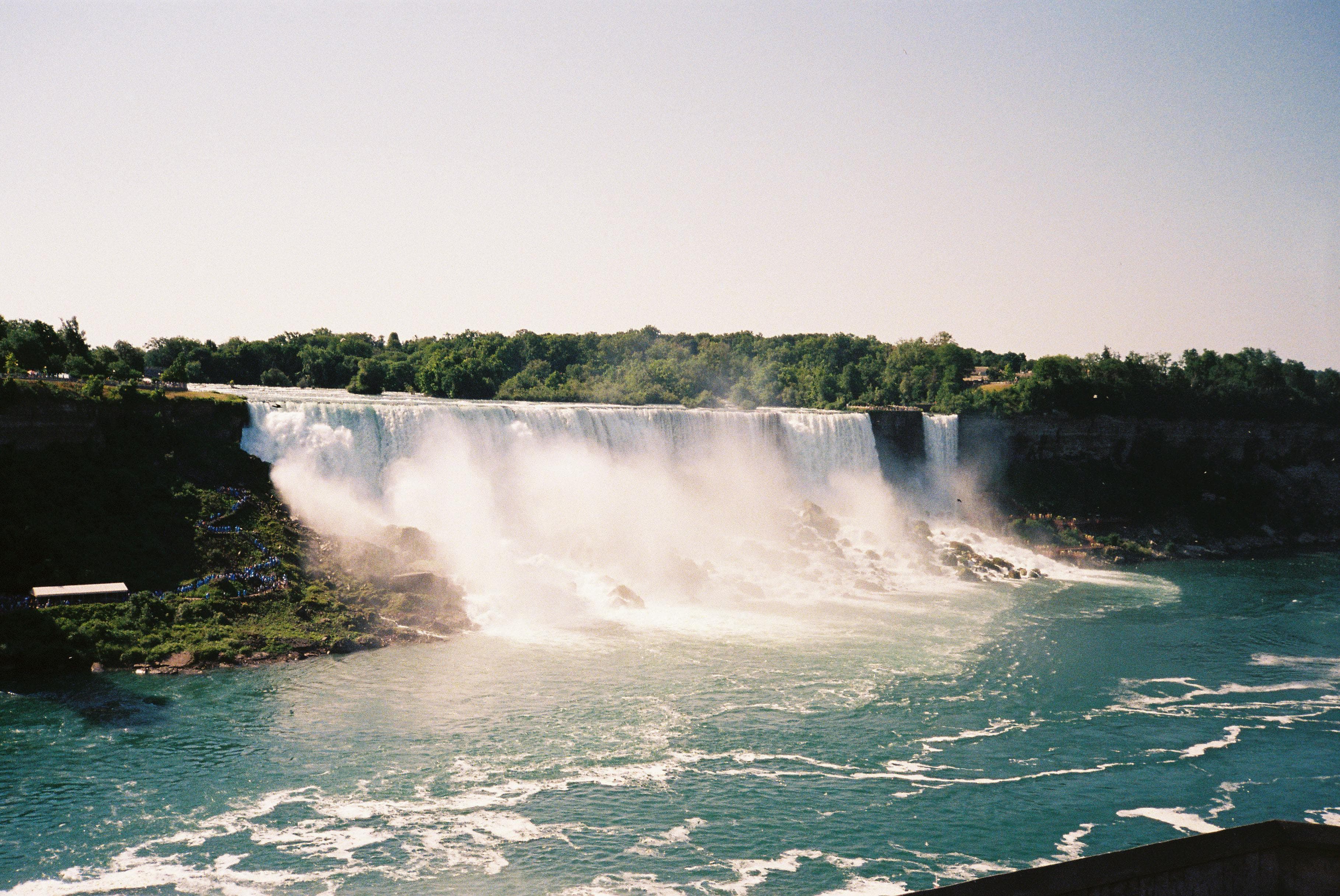
North America's most spectacular waterfall group — three cascades whose thunder shakes the ground, with rainbows almost always in view.
Overview
Niagara Falls is one of North America's most spectacular natural wonders, straddling the border between the United States and Canada and renowned for its immense volume and dramatic setting.
History
Niagara Falls formed roughly 12,000 years ago as glaciers retreated at the end of the last ice age, and erosion has been pushing the falls upstream ever since. The Iroquois called it Onguiaahra, meaning thunder of waters. European explorers first recorded it in 1678. In the late 19th century Nikola Tesla and George Westinghouse built the world's first hydroelectric power station here, launching the modern electrical industry.
Highlights
- •Horseshoe Falls, the thundering centrepiece on the Canadian side
- •The soaking thrill of the Maid of the Mist boat ride
- •Journey Behind the Falls, a tunnel walk to the back of the cascade
- •Dreamlike colour changes during the nightly illumination
- •Rare winter ice formations at the Cascades
Practical tips
- •View from the Canadian side for the best panorama
- •Take a boat tour in summer for a close-up experience
Practical information
- Best time
- June to August
- Tickets
- Free viewing on the Canadian side; tour packages from about CAD 25–30
- Opening hours
- Open year-round; evening illumination shows in summer
- Local food
- Poutine, maple products and butter tarts
- Getting around
- Toronto is the hub, with intercity trains and coaches; Niagara is reached by train or car
- Visa
- A Temporary Resident Visa (TRV) is required and biometrics must be provided. Processing can take a while, so apply two to three months ahead.
Traveller reviews
…