Uluru-Kata Tjuta
★ 4.8🇦🇺 YularaSuggested visit 2-3 daysBest season May to September, the cooler winter months
World HeritageNatural wonderAboriginal culture
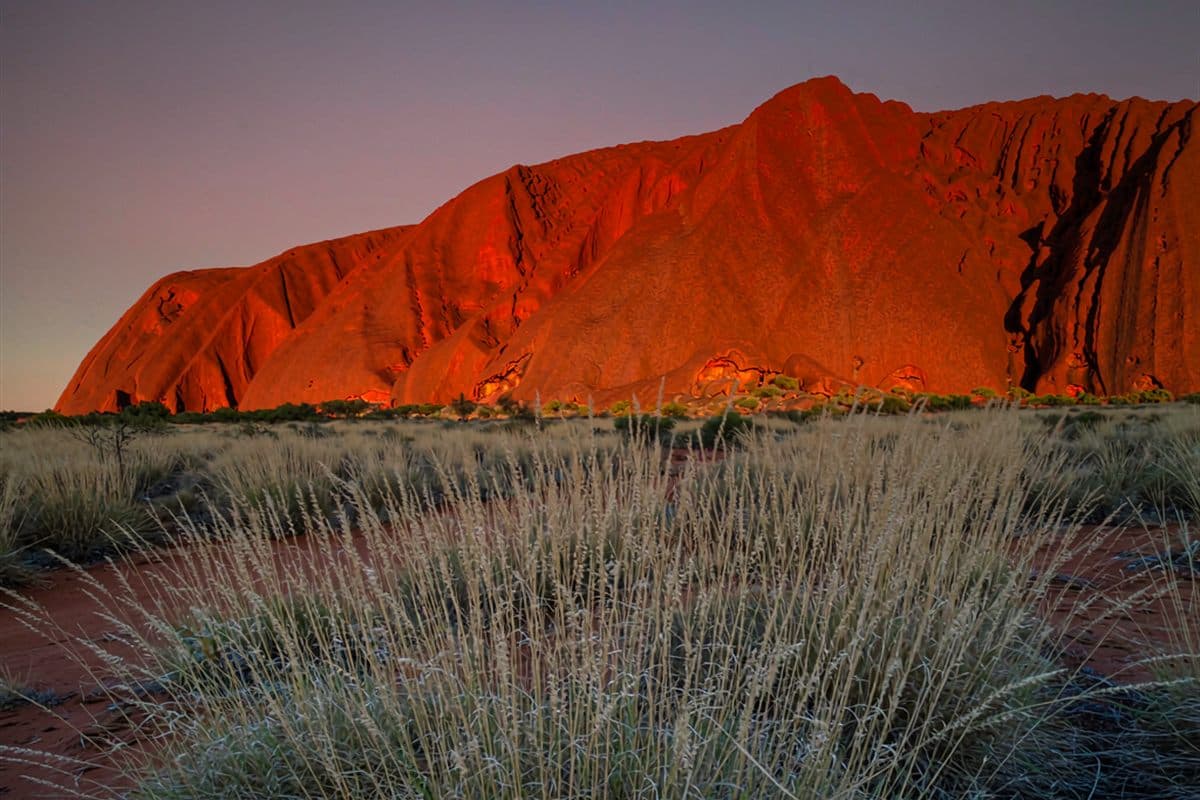
The great red monolith of central Australia, shifting from orange to violet at sunset and sunrise.
Overview
Uluru is a sandstone monolith about 9.4 kilometres around and 348 metres high, most of it buried below ground. It lies in the traditional lands of the Aṉangu people, and ancient paintings survive in the caves along its base. Kata Tjuta comprises 36 domed rock heads, with the 7.4-kilometre Valley of the Winds walk nearby. Sunrise and sunset viewing areas are essential, and climbing has been prohibited since 2019.
History
Aṉangu people have lived here for tens of thousands of years; the land was returned to them in 1985, inscribed with Kata Tjuta on the World Heritage List in 1987 and extended as a cultural landscape in 1994.
Highlights
- •Sunset and sunrise over Uluru
- •The Mala Walk and rock paintings
- •The Valley of the Winds at Kata Tjuta
- •The cultural centre
Practical tips
- •Climbing is prohibited — respect Aṉangu culture
- •Desert nights are cold; carry water and sun protection
Practical information
- Best time
- May-September
- Tickets
- Three-day park pass about AUD 38
- Opening hours
- From before sunrise to after sunset
- Local food
- Bush tucker, Australian barbecue
- Getting around
- Fly from Sydney or Melbourne to Ayers Rock Airport; the resort runs free shuttles.
- Visa
- A visa is required; an ETA or visitor visa can be applied for online.
Traveller reviews
…